
PCNL for Large and Complex Kidney Stones
Understanding percutaneous nephrolithotomy (PCNL), a minimally invasive procedure used to remove selected kidney stones through a small tract into the kidney.
Some kidney stones are too large, dense, or complex to be treated effectively with shock wave therapy or ureteroscopy alone. PCNL provides direct access to the kidney and may be recommended when achieving a high degree of stone clearance is the priority.
What Is PCNL?
Percutaneous Nephrolithotomy (PCNL) is a procedure used to remove kidney stones through a small opening created through the skin into the kidney.
A specialised telescope is passed directly into the kidney, allowing stones to be visualised, fragmented, and removed.
Unlike URS and RIRS, which access the kidney through the urinary tract, PCNL reaches the kidney directly through a small tract created in the back.
PCNL is most commonly used for larger stones, multiple stones, or stones that occupy several parts of the kidney.
At a Glance
PCNL
- Minimally invasive surgery for larger kidney stones
- Accesses the kidney through a small tract in the back
- Allows stones to be fragmented and removed directly
- Often considered for larger, multiple, or complex kidney stones
- May be recommended for complex or branched stones
- Usually performed under general anaesthesia
- Often achieves a high degree of stone clearance in a single procedure
- A temporary nephrostomy tube or ureteric stent may sometimes be required
Why Might PCNL Be Recommended?
Kidney stones vary considerably in their size, location, hardness, and overall complexity.
PCNL may be considered when:
- A kidney stone is large
- Multiple stones are present
- A stone occupies several parts of the kidney
- Previous treatments have not achieved adequate stone clearance
- A stone is unlikely to be treated effectively with ESWL or RIRS
- Recurrent infections are associated with the stone
- The stone is causing obstruction or affecting kidney drainage
For some larger stones, the likelihood of achieving satisfactory clearance with ESWL or RIRS alone may be lower. In these situations, direct access to the kidney may offer advantages.
How Is PCNL Performed?
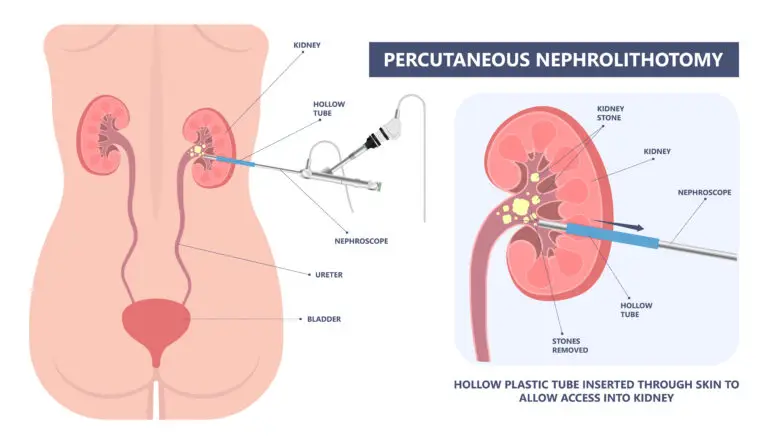
PCNL is performed under general anaesthesia.
A small tract is created through the skin of the back into the kidney using imaging guidance.
A telescope is then passed through this tract, allowing the stone to be identified directly.
The stone can be fragmented using specialised energy sources and the fragments removed.
At the end of the procedure, a temporary nephrostomy tube, ureteric stent, or both may be inserted depending on the findings.
How Does PCNL Compare With Other Kidney Stone Treatments?
Different kidney stone treatments reach the stone in different ways.
| Treatment | Typical Role |
|---|---|
| Observation | Monitoring stones that may pass naturally |
| ESWL | Breaking selected stones into smaller fragments using shock waves |
| URS | Reaching and treating stones within the ureter and selected kidney stones |
| RIRS | Reaching and treating stones located within the kidney |
| PCNL | Removing larger or more complex stones directly from the kidney |
The choice of treatment depends largely on the characteristics of the stone rather than the procedure itself.
PCNL vs RIRS: What's the Difference?
Both procedures are used to treat kidney stones, but they reach the kidney differently.
| Procedure | How the Kidney Is Reached |
|---|---|
| RIRS | A flexible scope is passed through the urethra, bladder, and ureter into the kidney |
| PCNL | A small tract is created directly into the kidney through the back |
The main difference is how the kidney is accessed. RIRS reaches the kidney through the natural urinary tract, while PCNL creates a small direct pathway into the kidney through the back. This direct access can be particularly useful when treating larger or more complex kidney stones.
Will All Stones Be Removed?
The aim of treatment is to achieve the highest possible degree of stone clearance.
The likelihood of complete clearance depends on factors such as:
- Stone size
- Stone location
- Number of stones
- Stone composition
- Kidney anatomy
Follow-up imaging is commonly used after treatment to assess stone clearance and determine whether any residual fragments remain.
Will I Need a Nephrostomy Tube or Stent?
A temporary drainage tube may sometimes be required following PCNL.
This may include:
- A nephrostomy tube exiting through the back
- A ureteric stent
- Both, depending on the situation
These devices help maintain drainage from the kidney while healing occurs.
Not every patient requires a drainage tube or stent, and the decision is usually made based on procedural findings.
What Can I Expect After PCNL?
Most patients experience some temporary symptoms while recovering, particularly during the first few days.
These may include:
- Blood-tinged urine
- Discomfort around the treatment site
- Tiredness following surgery
- Urinary symptoms related to a temporary ureteric stent
- Mild flank discomfort
Many patients are able to resume light activities within a short period, although recovery varies according to stone complexity and the procedure performed.
Possible Risks and Complications
All surgical procedures carry potential risks.
Possible complications of PCNL may include:
- Bleeding
- Urinary tract infection
- Fever or sepsis
- Injury to surrounding structures
- Residual stone fragments
- Need for additional procedures
- Discomfort related to drainage tubes or stents
The likelihood of complications varies according to stone complexity and procedural factors.
Frequently Asked Questions
Is PCNL a major operation?
PCNL is considered a minimally invasive surgical procedure. Although it involves creating a small tract into the kidney, it is substantially less invasive than traditional open stone surgery.
How painful is recovery after PCNL?
Discomfort around the treatment site is common during the early recovery period. Pain control measures are routinely provided after surgery.
How successful is PCNL?
PCNL is widely used because it can achieve a high degree of stone clearance, particularly for larger or more complex stones.
Will I have a scar?
The access tract is small and typically leaves only a small scar.
How long do I stay in hospital?
Length of stay varies according to the complexity of treatment and recovery. Some patients may require a short inpatient stay for monitoring.
Can kidney stones return after PCNL?
Yes. PCNL removes existing stones but does not prevent new stones from forming. Follow-up and stone prevention strategies may be recommended depending on the stone type and individual risk factors.
Why can't a large stone simply be treated with ESWL?
Smaller stones may often be treated using shock wave therapy. However, larger or more complex stones may not fragment adequately, increasing the likelihood of residual stone fragments and the need for repeated treatment. In selected situations, PCNL may offer a higher degree of stone clearance.
Understanding Your Treatment Options
PCNL is one of several procedures used in the management of kidney stones. The most appropriate treatment depends on factors such as stone size, location, anatomy, previous treatments, and overall health.
A discussion with a urologist can help clarify whether observation, ESWL, ureteroscopy, RIRS, PCNL, or another approach may be most appropriate.
Appointments with Dr Roger Anthony Idi are arranged through Prince Court Medical Centre.