Extracorporeal Shock Wave Lithotripsy (ESWL) for Kidney Stones
ESWL uses focused shock waves to break selected kidney stones into smaller fragments that can pass naturally in the urine.
Learn when ESWL may be considered, what to expect during treatment, how stone fragments pass afterwards, and how ESWL compares with other kidney stone treatments.
What Is ESWL?
Extracorporeal Shock Wave Lithotripsy (ESWL) is a treatment used to break selected kidney stones into smaller pieces using focused shock waves generated outside the body.
Unlike endoscopic stone surgery, ESWL does not involve an incision or instruments being passed into the urinary tract. Instead, the stone is targeted using imaging guidance and fragmented so that smaller pieces can leave the body naturally in the urine.
ESWL has been used for many years and remains an important treatment option for selected kidney stones.
At a Glance
ESWL
- No surgical incision
- Usually performed as a day procedure
- Often suitable for selected stones smaller than 2 cm
- Stone fragments pass naturally after treatment
- Recovery is usually relatively quick
- Some stones may require more than one treatment session
When Is ESWL Most Likely to Be Recommended?
Not every kidney stone requires surgery, and not every stone is suitable for ESWL.
ESWL is often considered for selected stones within the kidney or upper ureter, particularly when the stone size and location suggest a reasonable chance of successful fragmentation.
The decision is influenced by several factors, including:
- Stone size
- Stone location
- Stone density
- Kidney anatomy
- Previous stone treatments
- Overall health considerations
A treatment that works well for one patient may not necessarily be the best option for another, even when the stones appear similar on a scan.
What Are the Advantages of ESWL?
ESWL is one of the least invasive treatment options available for selected kidney stones. Unlike procedures such as ureteroscopy (URS), retrograde intrarenal surgery (RIRS), or percutaneous nephrolithotomy (PCNL), ESWL does not require an incision or instruments to be passed into the urinary tract.
For appropriately selected stones, ESWL can provide effective stone fragmentation while allowing most people to return home on the same day.
Potential advantages of ESWL include:
- No surgical incision
- No instruments inserted into the urinary tract
- Usually performed as a day procedure
- Relatively quick recovery for most patients
- Lower procedural burden compared with more invasive stone treatments
However, a less invasive treatment is not always the most suitable treatment. Some stones may be too large, too dense, or located in positions where other procedures are more likely to achieve complete stone clearance.
The choice of treatment depends on the characteristics of the stone, imaging findings, symptoms, and the overall clinical situation.
What Happens During ESWL?
During treatment, shock waves are directed towards the stone using imaging guidance.
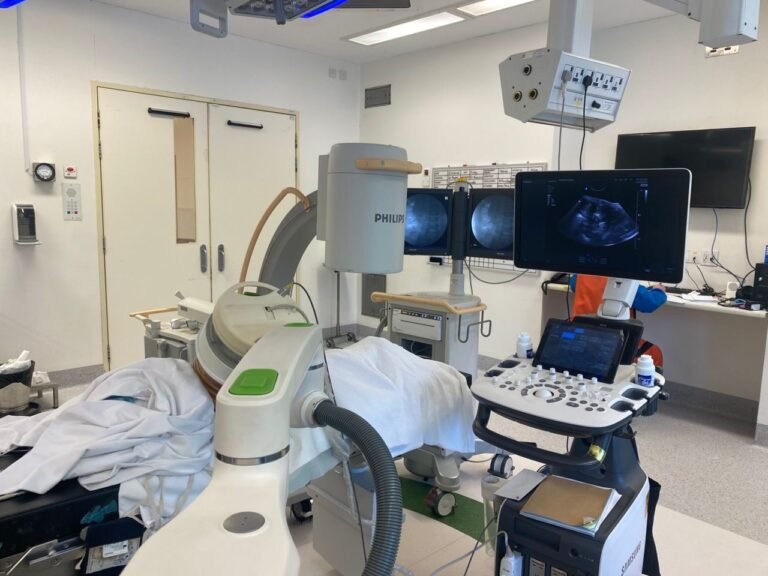
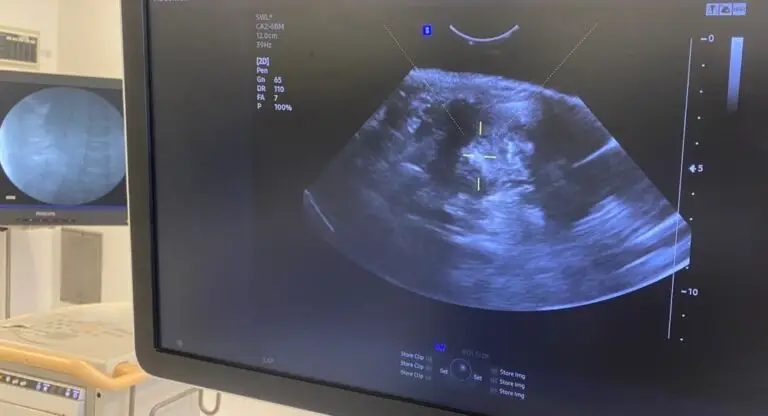
Depending on the location of the stone, ultrasound or X-ray imaging may be used to identify the stone and help ensure that treatment is focused accurately throughout the procedure.
The procedure is usually performed as a day treatment. Depending on the individual situation, pain relief, sedation, or anaesthesia may be used.
Treatment commonly takes less than an hour, although the exact duration varies according to the stone and treatment plan.
How Is the Stone Located During Treatment?
Patients often wonder how shock waves can be directed accurately at a stone that cannot be seen from outside the body.
During ESWL, imaging is used throughout treatment to identify the stone and monitor its position. Depending on the stone and equipment available, ultrasound, X-ray imaging, or a combination of both may be used.
Because breathing and body movement can affect stone position, periodic adjustments may be required during treatment to maintain accurate targeting.
The aim is to ensure that shock waves are focused on the stone while minimising exposure to surrounding tissues.
What Happens After ESWL?
Many people expect the stone to disappear immediately after treatment.
In reality, ESWL is usually the beginning of the stone clearance process rather than the end of it.
The shock waves break the stone into smaller fragments, which then pass naturally through the urinary tract over the following days or weeks. The speed of clearance varies between individuals and depends on factors such as the original stone size, location, and degree of fragmentation.
It is common to notice:
- Mild discomfort as fragments pass
- Temporary blood-stained urine
- Intermittent flank discomfort
- Small stone fragments in the urine
Most people can return to normal daily activities relatively quickly.
How Successful Is ESWL?
ESWL can be highly effective for carefully selected stones, but success rates vary.
Some stones fragment completely after a single treatment. Others may only partially fragment or leave residual stone fragments behind.
This does not necessarily mean the treatment has failed. Depending on the circumstances, further observation, an additional ESWL session, or an alternative procedure may be considered.
The aim is not simply to perform treatment, but to choose the approach most likely to achieve satisfactory stone clearance.
How Does ESWL Compare With Other Stone Treatments?
Several treatments are available for kidney stones, and each has advantages and limitations.
ESWL breaks the stone into smaller fragments that pass naturally in the urine. Other procedures, such as ureteroscopy (URS), retrograde intrarenal surgery (RIRS), and percutaneous nephrolithotomy (PCNL), allow the stone to be seen directly and treated or removed using specialised instruments.
In general:
- ESWL is less invasive and does not require instruments to enter the urinary tract.
- URS and RIRS allow direct treatment of stones within the ureter or kidney.
- PCNL is typically reserved for larger or more complex kidney stones.
- Some procedures may achieve higher stone-free rates for certain stone types and locations.
No single treatment is best for every patient. The most appropriate option depends on factors such as stone size, location, density, anatomy, symptoms, and treatment goals.
Follow-Up After ESWL
Follow-up helps determine how effectively the stone has fragmented and whether any residual fragments remain.
Depending on the original stone and treatment response, follow-up may include:
- Imaging studies
- Review of symptoms
- Assessment of stone passage
- Discussion of whether additional treatment is needed
The timing and type of follow-up vary according to the individual clinical situation.
Looking Beyond the Stone
For people who develop recurrent kidney stones, preventing future stones can be just as important as treating the current one.
Stone analysis, urine testing, blood tests, dietary assessment, and prevention strategies may help identify factors that contribute to stone formation and reduce the risk of recurrence.
Discussing ESWL for Kidney Stones
ESWL is one of several treatment options available for kidney stones. Whether it is suitable depends on the stone characteristics, imaging findings, symptoms, and overall clinical situation.
A careful review of these factors helps determine whether ESWL or another treatment approach is likely to provide the best outcome.
Appointments with Dr Roger Anthony Idi are arranged through Prince Court Medical Centre.
Frequently Asked Questions
Does ESWL hurt?
Most patients tolerate ESWL well. Depending on the stone and treatment plan, pain relief, sedation, or anaesthesia may be used to improve comfort during the procedure.
How long does it take for stone fragments to pass after ESWL?
This varies from person to person. Some fragments may pass within a few days, while others may take several weeks. The timing depends on the original stone size, location, and how well the stone fragments during treatment.
Will I need a ureteric stent after ESWL?
Not everyone requires a stent. In some situations, a stent may be recommended to help urine drain or reduce the risk of blockage from stone fragments.
Can kidney stones return after ESWL?
ESWL treats the existing stone but does not prevent new stones from forming. Stone analysis, dietary advice, and metabolic assessment may help reduce the risk of future stone episodes.
Can all kidney stones be treated with ESWL?
No. Some stones are too large, too dense, or located in positions where ESWL is less likely to be successful. Other treatments may be more appropriate in these situations.
How will I know if the treatment has worked?
Follow-up imaging is often used to assess stone fragmentation and determine whether any residual stone fragments remain.