
Ureteric Stents for Kidney Stones
Ureteric stents help maintain urine drainage from the kidney to the bladder when obstruction, swelling, or stone treatment affects the normal flow of urine.
Learn why ureteric stents are used, when they may be needed, what to expect while a stent is in place, and how stents fit into the overall management of kidney stones.
What Is a Ureteric Stent?
A ureteric stent is a thin, flexible tube placed inside the urinary tract to allow urine to drain from the kidney to the bladder.
The stent sits entirely within the body, with one end positioned in the kidney and the other in the bladder. It is usually temporary and may be used as part of the management of kidney stones or following stone-related procedures.
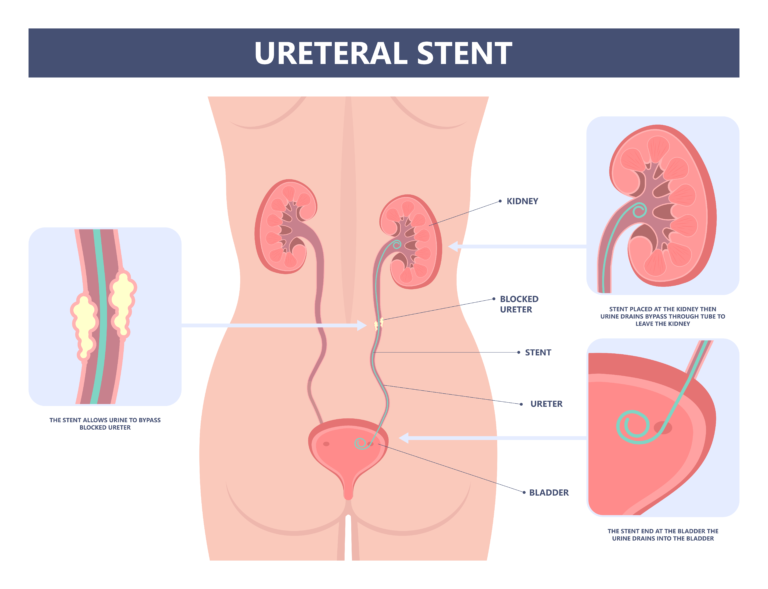
Although ureteric stents are commonly associated with kidney stone treatment, their purpose is not to remove the stone itself. Instead, they help maintain urine drainage when there is concern about obstruction or when the urinary tract requires support during recovery.
At a Glance
Ureteric Stent
- Maintains urine drainage between the kidney and bladder
- Used when urine flow is obstructed or requires temporary support
- May be placed before or after kidney stone treatment
- Does not remove, dissolve, or fragment kidney stones
- Temporary urinary symptoms are common
- Follow-up and planned removal are important
Why Are Ureteric Stents Used?
The kidneys continuously produce urine, which normally flows through the ureters into the bladder.
A kidney stone can sometimes obstruct this pathway. When urine cannot drain adequately, pressure may build up within the kidney and, in some situations, this may affect kidney function or increase the risk of complications.
A ureteric stent provides a temporary internal channel that helps urine continue to flow despite narrowing, swelling, or obstruction within the ureter.
The role of a stent depends on the clinical situation and may vary from one person to another.
When Might a Stent Be Needed for Kidney Stones?
A ureteric stent may be recommended in several situations.
Obstruction Caused by a Stone
A stone lodged within the ureter may partially or completely obstruct urine flow from the kidney.
In some cases, a stent is used to relieve the obstruction and protect the kidney while further treatment is planned.
Infection Together With Obstruction
When infection occurs in a kidney that cannot drain properly, urgent treatment may be required.
Restoring urine drainage is often a priority because obstruction and infection occurring together can become serious if left untreated.
Before Stone Treatment
Some patients may require temporary stenting before procedures such as ureteroscopy (URS), retrograde intrarenal surgery (RIRS), or other stone treatments.
The stent may help prepare the ureter for treatment and facilitate access during the procedure.
After Stone Treatment
Following procedures such as URS, RIRS, or PCNL, temporary stenting may be used to support urine drainage while swelling settles and the urinary tract heals.
Not every stone procedure requires a stent, and the decision depends on the individual circumstances.
Does a Stent Treat the Stone?
No.
A ureteric stent helps maintain urine drainage but does not remove, dissolve, or fragment the stone itself.
Depending on the size, location, and characteristics of the stone, further management may include observation, ESWL, ureteroscopy (URS), retrograde intrarenal surgery (RIRS), percutaneous nephrolithotomy (PCNL), or other treatment approaches.
Understanding this distinction is important because stent placement is often one step within a broader treatment plan rather than the final treatment.
What Can Be Expected While a Stent Is in Place?
Symptoms associated with ureteric stents vary widely.
Some individuals experience very few symptoms, while others notice urinary symptoms during normal daily activities.
Because one end of the stent sits within the bladder, some individuals experience:
- Increased urinary frequency
- Urinary urgency
- A sensation of needing to pass urine more often
- Mild discomfort during or after urination
Some people also notice intermittent discomfort in the side, lower abdomen, or groin. Small amounts of blood in the urine may occur from time to time, particularly after physical activity.
The presence and severity of symptoms vary widely and do not necessarily indicate that there is a problem with the stent.
Living With a Ureteric Stent
Most individuals can continue normal daily activities while a ureteric stent remains in place.
Walking, work, travel, and light exercise are often possible. However, physical activity may temporarily increase urinary symptoms such as frequency, urgency, discomfort, or visible blood in the urine.
The impact of a stent varies considerably between individuals.
How Long Does a Ureteric Stent Stay In?
The duration depends on the reason for insertion.
Some stents remain in place for only a few days after treatment. Others may be required for several weeks while healing occurs or while further stone management is planned.
Because ureteric stents are intended to be temporary, arrangements for follow-up and removal are usually made at the time of treatment or shortly afterwards.
How Is a Ureteric Stent Removed?
Most ureteric stents can be removed using a small telescope passed through the urinary passage into the bladder.
Stent removal is usually much shorter than the procedure used to insert it.
The exact method depends on the type of stent, the reason for insertion, and the overall treatment plan.
When Should Medical Attention Be Sought?
Medical assessment should be sought if symptoms are significantly worse than expected or if there are concerns about infection or urinary drainage.
Examples include:
- Fever or chills
- Difficulty passing urine
- Severe or worsening pain
- Heavy bleeding in the urine
- Persistent or worsening symptoms despite initial improvement
These situations may require further assessment.
Understanding Your Ureteric Stent
A ureteric stent is often used to maintain urine drainage while a kidney stone is being treated or while the urinary tract recovers after a procedure.
Understanding why a stent has been recommended, how long it is expected to remain in place, and what the next step involves can help place the procedure within the broader treatment plan.
Frequently Asked Questions
Will I always need a ureteric stent after kidney stone treatment?
No. Whether a stent is required depends on factors such as the type of procedure performed, the size and location of the stone, the condition of the ureter, and the likelihood of post-treatment swelling. Some patients require a stent, while others do not.
Can a kidney stone be treated without placing a stent?
Often, yes. Not all kidney stones require stenting. Whether a stent is needed depends on factors such as the degree of obstruction, the planned treatment, and whether temporary support of urine drainage is required.
Why do some people experience symptoms while others do not?
Stent-related symptoms vary considerably between individuals. Factors such as bladder sensitivity, stent position, activity level, and the reason for stent placement may influence how noticeable the stent feels.
Does having a stent mean the stone is serious?
Not necessarily. A stent is used for several reasons, including maintaining drainage, preparing for a planned procedure, or supporting healing after treatment. The presence of a stent does not by itself indicate that a stone is unusually large or severe.
Can another kidney stone form after the stent is removed?
A stent does not affect the underlying tendency to form stones. Whether future stones develop depends on factors such as stone composition, fluid intake, diet, metabolic factors, and previous stone history.