
HIFU for Prostate Cancer in Kuala Lumpur
High-Intensity Focused Ultrasound (HIFU) is a focal therapy that may be considered for carefully selected men with localised prostate cancer. Treatment suitability depends on MRI findings, prostate biopsy results, PSA level, cancer characteristics, and overall treatment goals.
High-Intensity Focused Ultrasound as a Focal Treatment Option
High-Intensity Focused Ultrasound, or HIFU, is a minimally invasive treatment that uses focused ultrasound energy to heat and destroy targeted areas of prostate tissue.
In prostate cancer care, HIFU is usually discussed as a form of focal therapy — meaning treatment is directed at a specific area of cancer within the prostate, rather than removing or treating the whole gland.
HIFU is not suitable for every man with prostate cancer. Careful assessment with MRI, biopsy results, PSA level, cancer grade, cancer location, and overall treatment goals is essential before deciding whether this approach may be appropriate.
At a Glance
| Key Point | What It Means |
|---|---|
| Treatment type | Minimally invasive focal therapy |
| Main use | Selected localised prostate cancer |
| How it works | Focused ultrasound energy heats and destroys targeted tissue |
| Hospital stay | Often performed as a day or short-stay procedure, depending on centre protocol |
| Potential advantage | May reduce impact on urinary control and sexual function in carefully selected men |
| Follow-up | PSA monitoring, MRI, and sometimes repeat biopsy may be needed |
What Is HIFU?
HIFU stands for High-Intensity Focused Ultrasound.
During treatment, ultrasound energy is focused onto a planned area within the prostate. This creates heat at the target zone, destroying prostate tissue in that area while aiming to limit damage to surrounding structures.
For prostate cancer, HIFU may be used as:
- Focal HIFU – treating only the cancer-containing part of the prostate
- Hemi-gland HIFU – treating one side of the prostate
- Whole-gland HIFU – treating the whole prostate, less commonly used in modern focal treatment discussions
In prostate cancer care, most discussion around HIFU relates to focal treatment, where only the known cancer-containing area is treated.
Who May Be Suitable for HIFU?
HIFU may be considered in carefully selected men with early-stage (localised) prostate cancer, where the cancer appears confined to the prostate and can be clearly identified on imaging and biopsy.
Suitability depends on several factors, including:
- MRI findings
- Prostate biopsy results
- Gleason score / Grade Group
- PSA level
- Cancer size, location, and number of areas involved
- Prostate size and anatomy
- Baseline urinary and sexual function
- Whether the cancer is low, intermediate, or higher risk
- The patient’s priorities and willingness for close follow-up
HIFU is generally not appropriate when prostate cancer has spread outside the prostate or when disease is too extensive to safely target with focal treatment.
Important to Know
HIFU is not chosen based on preference alone. Suitability depends on whether the cancer can be clearly seen, accurately targeted, and safely monitored after treatment.
When HIFU May Be Considered
HIFU may be considered for selected men with localised prostate cancer when the cancer appears suitable for a targeted treatment approach.
This usually means the cancer can be clearly identified on MRI and biopsy, appears confined to the prostate, and is located in an area that can be treated safely while aiming to reduce treatment to surrounding healthy prostate tissue.
HIFU may be discussed when:
- The cancer is localised and suitable for focal treatment
- The main cancer area can be clearly seen and targeted
- The cancer grade, PSA level, and PSA density are appropriate for this approach
- The prostate size and anatomy allow safe treatment planning
- Baseline urinary and sexual function have been considered
- The patient understands the need for structured long-term follow-up
The aim of HIFU is to treat the known cancer area while reducing treatment to the rest of the prostate where appropriate. However, it is not simply a “less invasive alternative” to surgery or radiotherapy. Its suitability depends on careful assessment, balanced counselling, and whether ongoing monitoring after treatment is acceptable.
The decision to consider HIFU should be made after comparing it carefully with other suitable options, such as active surveillance, robotic prostatectomy, or radiotherapy. The most appropriate treatment depends on the cancer pattern, expected cancer control, possible side effects, and the patient’s long-term priorities.
Latest Research on HIFU for Prostate Cancer
One of the questions patients often ask is whether HIFU continues to control prostate cancer many years after treatment.
Recently published 10-year results from the UK HEAT and ICE prospective registries provide encouraging long-term oncological and functional outcomes. This represents one of the largest prospective datasets with long-term follow-up for focal therapy in localised prostate cancer. The study followed more than 3,400 men treated with focal HIFU or focal cryotherapy and found that many carefully selected patients maintained good cancer control while avoiding radical surgery or radiotherapy.
The study also reported favourable urinary continence and sexual function outcomes for many patients. However, some men required repeat focal treatment or later radical treatment, highlighting the importance of careful patient selection and ongoing follow-up.
Although international guidelines continue to recommend careful patient selection, these long-term results add to the growing evidence supporting focal HIFU as a treatment option for selected men with localised prostate cancer.
Study reference
Reddy D, et al. Ten-year outcomes following focal therapy for localised prostate cancer from the HEAT and ICE registries. European Urology. 2026.
Important Things to Know Before Choosing HIFU
HIFU should be discussed carefully because it is a targeted treatment, not removal of the whole prostate.
Unlike radical prostatectomy, the prostate remains in the body after HIFU. This means that untreated prostate tissue is still present, and PSA levels usually do not fall to zero.
It is important to understand that:
- Cancer may persist or recur in the treated area
- Cancer may later be detected in another part of the prostate
- PSA monitoring needs to be interpreted differently from after prostate removal
- Repeat MRI or biopsy may be needed during follow-up
- Further treatment may be required if cancer progresses or returns
These limitations do not mean HIFU is unsuitable for all patients. Rather, they highlight why careful selection, realistic counselling, and structured long-term follow-up are essential before choosing this approach.
Can HIFU Be Used After Radiotherapy?
For some men, prostate cancer may recur within the prostate after radiotherapy. If the recurrence remains confined to the prostate and there is no evidence of cancer elsewhere in the body, another local treatment may still be possible.
One option for carefully selected patients is salvage HIFU. Instead of treating newly diagnosed prostate cancer, salvage HIFU aims to destroy areas of recurrent cancer while preserving as much healthy surrounding tissue as possible.
Not everyone is suitable for this approach. Before considering salvage HIFU, further assessment is usually required, which may include:
- PSA testing and PSA trend
- Multiparametric MRI
- PSMA PET/CT
- Repeat prostate biopsy when appropriate
- Review of previous radiotherapy treatment
These investigations help confirm that the cancer has recurred only within the prostate and assess whether salvage treatment is technically feasible.
Recent Clinical Evidence Supports Salvage HIFU
Several prospective studies and systematic reviews have evaluated salvage HIFU after radiotherapy in carefully selected patients.
One of the largest prospective multicentre studies evaluating salvage HIFU after radiotherapy included more than 500 patients treated across over 30 centres. The study demonstrated encouraging medium-term cancer control together with acceptable urinary function in carefully selected patients.
While these findings are promising, treatment decisions should remain individualised. The most appropriate option depends on the extent of recurrence, previous treatment, imaging findings, urinary function, overall health, and the patient’s treatment goals.
HIFU Compared With Other Prostate Cancer Treatments
| Treatment option | Main approach | Key consideration |
|---|---|---|
| Active surveillance | Close monitoring without immediate treatment | Suitable for selected low-risk prostate cancers |
| Robot-assisted radical prostatectomy | Surgical removal of the prostate | Treats the whole prostate and provides full pathology |
| Radiotherapy | Radiation treatment to the prostate | Non-surgical whole-gland treatment, sometimes combined with hormone therapy |
| HIFU | Focused ultrasound energy to heat and destroy targeted prostate tissue | A focal treatment option for carefully selected localised prostate cancer |
| IRE | Electrical pulses used to treat targeted cancer tissue | Another focal therapy option; suitability depends on tumour location and anatomy |
| Cryotherapy | Freezing targeted prostate tissue | May be used as focal or whole-gland treatment in selected cases |
| Hormonal therapy | Reduces testosterone stimulation of prostate cancer | Usually used with radiotherapy or for more advanced disease |
What Happens Before HIFU?
Before HIFU is considered, assessment usually includes:
- PSA blood test
- Multiparametric prostate MRI
- Targeted and systematic prostate biopsy
- Review of cancer grade and stage
- Review of baseline urinary symptoms
- Discussion in a multidisciplinary setting where appropriate
- Counselling about alternatives, risks, and follow-up
The aim is to confirm whether the cancer is truly suitable for focal treatment and whether HIFU is a reasonable option compared with surgery, radiotherapy, or surveillance.
What Happens During HIFU?
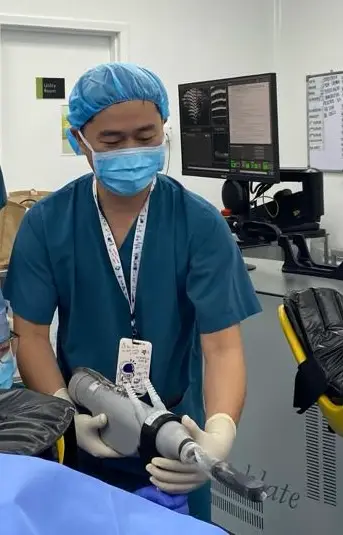
HIFU is usually performed under general anaesthesia.
A probe is placed through the rectum to deliver focused ultrasound energy to the planned treatment area in the prostate. Imaging guidance is used to help position and monitor the treatment. A urinary catheter may be needed temporarily after the procedure.
The exact technique, treatment area, and recovery plan may vary depending on the treating centre and the patient’s anatomy.
Recovery After HIFU
Recovery is usually shorter than after major surgery, but some temporary urinary symptoms can occur. Most men resume light daily activities within several days, although complete recovery varies depending on the extent of treatment and individual healing.
Possible short-term effects include:
- Burning or discomfort when passing urine
- Increased urinary frequency or urgency
- Blood in the urine or semen
- Temporary difficulty passing urine
- Need for a catheter for a short period
- Urinary tract infection
Most men require follow-up to monitor symptoms, PSA levels, and treatment response.
Follow-Up After HIFU Is Essential
Follow-up is an important part of HIFU treatment.
Because the prostate remains in the body after HIFU, PSA levels usually do not fall to zero. PSA results therefore need to be interpreted differently from after prostate removal surgery.
Ongoing monitoring is used to assess treatment response and to look for signs of persistent or recurrent cancer. Follow-up may include:
- Regular PSA blood tests
- Review of urinary and sexual function
- Repeat prostate MRI
- Repeat prostate biopsy in selected cases
- Discussion of further treatment if cancer persists, recurs, or progresses
This is important because cancer may occasionally remain in the treated area, return later, or be detected in another part of the prostate that was not treated.
Follow-up schedules vary, but PSA testing is usually performed regularly during the first few years after treatment together with MRI when appropriate.
Men considering HIFU should understand that focal treatment usually requires structured long-term surveillance. Careful follow-up helps ensure that any future changes are identified and managed appropriately.
When to Seek Specialist Assessment
A specialist urology assessment may be helpful if you have been diagnosed with localised prostate cancer and wish to understand whether focal therapy may be appropriate.
HIFU is only one of several treatment options. The most suitable approach depends on balancing cancer control, urinary function, sexual function, recovery, long-term monitoring, and personal priorities.
Discussing HIFU and Prostate Cancer Treatment Options
Choosing treatment for prostate cancer requires careful interpretation of MRI findings, biopsy results, PSA level, cancer risk, prostate anatomy, and personal priorities.
The most appropriate treatment is the one that provides the best balance between long-term cancer control, preservation of urinary and sexual function where possible, and the patient’s treatment goals. A detailed assessment helps determine whether HIFU or another treatment offers the most suitable approach.
Dr Roger Anthony Idi, Consultant Urologist, provides assessment and counselling for men with prostate cancer, including discussion of focal treatment suitability where relevant.
Appointments are arranged through Prince Court Medical Centre.
Frequently Asked Questions
Is HIFU suitable for everyone with prostate cancer?
No. HIFU is generally considered for carefully selected men with localised prostate cancer. Whether it is appropriate depends on factors such as the location and extent of the cancer, MRI and biopsy findings, PSA level, prostate size, previous treatments, and overall health. A detailed assessment is needed to determine whether HIFU is a suitable option.
How successful is HIFU in treating prostate cancer?
HIFU has shown encouraging cancer control in appropriately selected patients with localised prostate cancer. Outcomes vary depending on tumour characteristics, treatment goals, and follow-up duration. Long-term monitoring with PSA tests, MRI, and, when indicated, repeat biopsy remains important after treatment.
How long does the HIFU procedure take?
The procedure is usually performed under general anaesthesia and commonly takes between 2 and 4 hours, depending on the size of the prostate and the extent of treatment. Most patients stay in hospital for a short period, although this varies between treatment centres and individual circumstances.
What are the advantages of HIFU compared with surgery or radiotherapy?
HIFU is minimally invasive and does not require surgical removal of the prostate. In selected patients, it may preserve more healthy tissue, potentially reducing the risk of urinary incontinence and erectile dysfunction compared with whole-gland treatment. However, each treatment has its own benefits and limitations, and the most appropriate option depends on the individual clinical situation.
Will I need a catheter after HIFU?
Yes. Most patients require a urinary catheter after HIFU because temporary swelling of the prostate can make passing urine difficult. The catheter is usually removed after several days to two weeks, depending on the extent of treatment and recovery.
What are the possible side effects of HIFU?
Most side effects are temporary and improve with time. These may include:
- Difficulty passing urine
- Burning or discomfort during urination
- Blood in the urine
- Blood in the semen
- Increased urinary frequency or urgency
Less commonly, urinary infection, urethral stricture, urinary leakage, erectile dysfunction, or rectal injury may occur. Your doctor will discuss the potential risks based on your individual circumstances.
Can prostate cancer return after HIFU?
Yes. Although HIFU aims to destroy the targeted cancer, recurrence can still occur either within the treated area or elsewhere in the prostate. Regular follow-up with PSA testing, MRI, and additional investigations when appropriate helps detect recurrence early.
Can HIFU be repeated?
In selected cases, yes. If a new area of cancer develops within the prostate or if some cancer remains after the initial treatment, repeat HIFU may be possible. Whether this is appropriate depends on imaging findings, previous treatment, and the location of the recurrence.
Can HIFU be performed after radiotherapy?
Yes, for carefully selected patients. If prostate cancer recurs within the prostate after radiotherapy and there is no evidence of spread elsewhere, salvage HIFU may be considered. Further assessment with PSA, MRI, PSMA PET/CT, and sometimes repeat biopsy is usually required before deciding whether this approach is suitable.
How will I be monitored after HIFU?
Follow-up usually includes regular PSA blood tests and clinic reviews. MRI scans and repeat prostate biopsy may also be recommended in selected patients to assess treatment response and detect any recurrent cancer. Follow-up schedules vary depending on individual circumstances.
If HIFU is not suitable, what other treatment options are available?
Alternative treatments may include active surveillance, robotic-assisted radical prostatectomy, radiotherapy, hormonal therapy, or other focal therapy techniques, depending on the stage and characteristics of the cancer. Treatment decisions are best made after discussion with a multidisciplinary team and consideration of the patient’s goals and preferences.
Will HIFU affect my erections?
One aim of focal HIFU is to preserve as much healthy prostate tissue and surrounding nerves as possible. Compared with whole-gland treatments, carefully selected men may have a lower risk of erectile dysfunction. However, erectile function can still be affected, particularly if the cancer is close to the neurovascular bundles or if a larger treatment area is required. Outcomes vary between individuals and should be discussed before treatment.
Will my PSA become undetectable after HIFU?
No. Unlike radical prostatectomy, the prostate remains in place after HIFU, so PSA levels do not usually fall to zero. Instead, PSA trends are monitored over time together with MRI and, in selected cases, repeat biopsy to assess treatment response and detect recurrent disease.
Has HIFU been studied over the long term?
Yes. Recently published 10-year data from one of the largest prospective studies of focal HIFU has shown encouraging long-term outcomes in carefully selected patients. While these findings continue to strengthen the evidence supporting focal HIFU, treatment remains suitable only for selected men after careful assessment with PSA testing, MRI and prostate biopsy.
Is HIFU considered experimental?
No. HIFU is an established treatment option for carefully selected men with localised prostate cancer in experienced centres. However, it is not suitable for every patient, and international guidelines recommend careful selection and structured follow-up because long-term evidence is still continuing to evolve.
Related Prostate Cancer Resources
You may also find these prostate cancer resources helpful when learning about diagnosis, focal therapy, surgery, radiotherapy, and follow-up after treatment.
PSMA PET-CT for Prostate Cancer
Multidisciplinary Care for Prostate Cancer
Focal Therapy for Prostate Cancer
Robotic Prostatectomy for Prostate Cancer