
Transperineal Prostate Biopsy in Kuala Lumpur
Prostate biopsy for raised PSA, abnormal prostate MRI, or suspected prostate cancer
A raised PSA, suspicious prostate MRI or persistent concern following a previous negative biopsy may require further assessment.
Transperineal prostate biopsy allows tissue samples to be obtained through the skin between the scrotum and anus, with a lower infection risk compared with traditional transrectal biopsy.
Dr Roger Anthony Idi provides prostate biopsy assessment in Kuala Lumpur, including MRI-targeted and systematic sampling when clinically indicated.
Overview
A transperineal prostate biopsy is performed when tissue samples are needed to investigate possible prostate cancer.
The procedure uses ultrasound guidance to obtain samples through the perineal skin rather than through the rectum. This approach is associated with a lower infection risk and allows access to different areas of the prostate, including suspicious regions identified on MRI.
The decision to proceed with biopsy depends on PSA results, MRI findings, previous biopsy history and the patient’s overall clinical risk.
At a Glance
A transperineal prostate biopsy may be considered when:
- PSA is persistently raised or rising
- prostate MRI shows a suspicious area
- previous biopsy was negative but concern remains
- biopsy results are needed to guide treatment planning
- active surveillance requires further assessment
What Is a Prostate Biopsy?
A prostate biopsy involves collecting small tissue samples from the prostate gland. These are examined under a microscope by a pathologist to determine whether prostate cancer is present.
If cancer is detected, the biopsy report provides information about its grade and the extent of cancer within the sampled tissue. These findings help guide decisions about active surveillance, surgery, radiotherapy or other treatment options.
A raised PSA does not automatically mean that a biopsy is necessary. The decision is made after considering PSA trends, prostate MRI findings, examination results and other risk factors.
What Is a Transperineal Prostate Biopsy?
A transperineal prostate biopsy takes tissue samples through the perineum, which is the skin between the scrotum and anus.
This differs from a transrectal biopsy, where the biopsy needle passes through the rectum. Because the transperineal route avoids passing the needle through the bowel, it is associated with a lower risk of infection compared with the traditional transrectal approach.
During the procedure, ultrasound is used to visualise the prostate and guide the biopsy needle. If a prostate MRI has shown a suspicious area, targeted samples may be taken from that region. Additional systematic samples may also be collected from different zones of the prostate to reduce the chance of missing clinically significant cancer.
Why the Transperineal Route May Be Recommended
The transperineal approach is commonly used in prostate cancer diagnosis because it allows prostate tissue to be sampled through the skin rather than through the rectum.
Potential advantages include:
- Lower infection risk compared with the transrectal route, as the needle does not pass through the bowel
- Good access to different areas of the prostate, including anterior regions that may be harder to sample through the rectum
- Ability to combine MRI-targeted and systematic sampling when clinically appropriate
- Useful for repeat biopsy, especially when PSA remains raised despite a previous negative biopsy
- Suitable for day-procedure care in many patients, depending on the anaesthetic plan and medical factors
The biopsy route is only one part of the decision. PSA level, MRI findings, prostate size, previous biopsy history, medication use, infection risk, and overall health are also considered before recommending biopsy.
MRI-Targeted and Systematic Prostate Biopsy
A prostate biopsy may involve targeted samples, systematic samples, or a combination of both.
MRI-targeted biopsy
MRI-targeted biopsy focuses on suspicious areas seen on prostate MRI. These areas are often described using a PI-RADS score, which helps estimate how concerning a prostate lesion may be.
Targeted biopsy may be performed using MRI-ultrasound fusion guidance or cognitive targeting, depending on the clinical setting, imaging findings, and available equipment.
Systematic biopsy
Systematic biopsy involves taking samples from different zones of the prostate, even if MRI does not show a clear abnormality. This helps reduce the chance of missing clinically significant cancer.
In many cases, MRI-targeted and systematic biopsy are combined to improve diagnostic confidence.
How the Biopsy Approach Is Planned
A transperineal prostate biopsy is planned according to the reason for biopsy, MRI findings, prostate size, previous biopsy history, medication use, and overall health.
The biopsy plan considers:
PSA results and previous investigations: Including PSA trends, MRI findings and any previous biopsy reports.
Biopsy sampling strategy: Whether MRI-targeted sampling, systematic sampling or both are appropriate.
Prostate anatomy: Including prostate size and the location of suspicious areas.
Patient safety and comfort: Including medication use, infection risk, urine test results and the appropriate anaesthetic approach.
Different transperineal biopsy techniques and guidance systems may be used depending on the clinical circumstances. The aim is to obtain representative tissue samples while minimising avoidable risks.
Dr Roger Anthony Idi — Clinical Practice and Teaching
Dr Roger Anthony Idi is a Consultant Urologist in Kuala Lumpur with clinical experience in transperineal prostate biopsy, including MRI-targeted and systematic sampling.
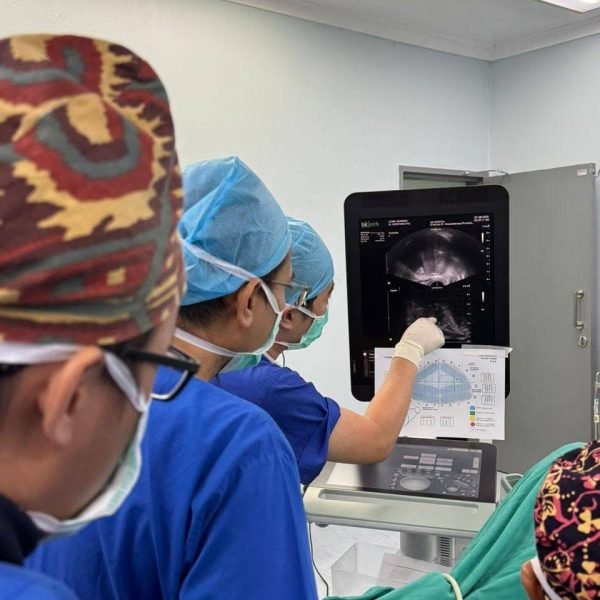
He has also been invited to conduct hands-on training for fellow clinicians, sharing practical techniques in ultrasound interpretation, prostate anatomy, needle positioning and biopsy sampling.
His clinical approach includes assessing whether biopsy is necessary, selecting appropriate sampling strategies and interpreting biopsy findings alongside PSA trends and prostate MRI results.
For men with a persistently raised PSA, suspicious MRI findings or previous negative biopsy, the choice of biopsy technique and sampling strategy may require further assessment.
When May a Transperineal Prostate Biopsy Be Recommended?
A transperineal prostate biopsy may be considered when test results suggest a possible risk of prostate cancer or when more information is needed to guide management.
Common reasons include:
- persistently raised or rising PSA
- abnormal prostate MRI
- suspicious digital rectal examination
- previous negative biopsy but ongoing clinical concern
- monitoring during active surveillance
- clarifying cancer grade before treatment planning
- reassessment after previous prostate cancer treatment in selected cases
Not every raised PSA requires an immediate biopsy. In some cases, repeat PSA testing, PHI testing or prostate MRI may be recommended before deciding whether biopsy is needed.
Read more about how a raised PSA is assessed.
If you have a persistently raised PSA, suspicious MRI findings or ongoing concerns following a previous negative biopsy, an urology consultation can help determine the appropriate next step.
What Happens During a Transperineal Prostate Biopsy?
A transperineal prostate biopsy is usually performed as a day procedure. The exact steps may vary depending on the biopsy technique, anaesthetic plan, and individual patient factors.
In general:
- You will be positioned so the prostate can be assessed clearly with ultrasound.
- Local anaesthetic, sedation, or general anaesthetic may be used depending on the planned approach.
- An ultrasound probe is used to visualise the prostate.
- The biopsy needle passes through the perineal skin to collect tissue samples.
- MRI-targeted samples may be taken from suspicious areas seen on prostate MRI.
- Systematic samples may also be taken from different areas of the prostate.
- The samples are sent to a pathology laboratory for analysis.
Most patients are able to go home the same day, although this depends on the anaesthetic used and individual recovery.
Is a Transperineal Prostate Biopsy Painful?
Most patients tolerate the procedure well. Local anaesthetic is used to numb the area, and some patients may have sedation or general anaesthetic depending on the biopsy plan.
You may feel pressure, brief discomfort, or mild soreness afterwards. Some patients may experience more discomfort than others. The anaesthetic plan and expected recovery will be explained before the procedure.
After the Biopsy: Recovery and Possible Side Effects
Mild symptoms are common after prostate biopsy and usually improve with time.
These may include:
- blood in the urine for a short period
- blood in the semen, which may last longer
- mild bruising or soreness in the perineal area
- temporary discomfort when passing urine
- temporary difficulty passing urine in some patients
Although infection risk is lower with the transperineal route compared with the transrectal approach, seek urgent medical assessment if any of the following occur:
- fever or chills
- worsening pain
- inability to pass urine
- heavy bleeding
- feeling generally unwell after the procedure
Specific instructions on medication, activity, and when to seek urgent help are usually provided after the biopsy.
When Results Are Usually Available
Biopsy samples are reviewed by a pathologist. Results are usually available after several working days, depending on laboratory processing.
The biopsy report may show:
- no cancer detected
- benign prostate changes
- inflammation
- prostate cancer
- the Grade Group or Gleason score, if cancer is present
- how many biopsy cores contain cancer
- how much cancer is present in each involved core
- whether cancer was found in targeted or systematic samples
These details help guide the next step in care. Depending on the findings, options may include active surveillance, surgery, radiotherapy, focal therapy, hormone therapy, further imaging, or continued monitoring.
How Results Guide the Next Step
A prostate biopsy does more than confirm whether cancer is present. It also helps estimate the cancer’s risk level and supports treatment planning.
If prostate cancer is detected, the biopsy result is usually considered together with:
- PSA level and PSA trend
- prostate MRI findings
- cancer grade
- number of positive biopsy cores
- amount of cancer in each core
- whether the cancer appears localised or more advanced
- age and general health
- urinary symptoms
- sexual function priorities
- personal treatment preferences
This information helps determine whether the cancer may be suitable for active surveillance or whether treatment such as surgery, radiotherapy, focal therapy, or other approaches should be discussed.
Transperineal Biopsy vs Transrectal Biopsy
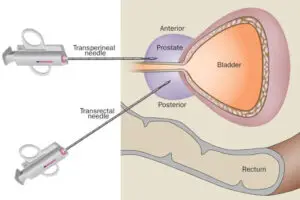
| Feature | Transperineal biopsy | Transrectal biopsy |
|---|---|---|
| Needle route | Through the perineal skin | Through the rectum |
| Infection risk | Generally lower because the bowel is avoided | Higher because the needle passes through the rectum |
| Access to anterior prostate | Often better | May be more limited |
| MRI-targeted biopsy | Can be performed | Can be performed |
| Systematic sampling | Can be performed | Can be performed |
| Anaesthesia | Local anaesthetic, sedation, or general anaesthetic depending on the case | Often local anaesthetic |
| Current role | Increasingly used in prostate cancer diagnosis | Traditional approach, still used in some settings |
The most suitable biopsy approach depends on the clinical indication, patient factors, available equipment, and the doctor’s assessment.
Before the Procedure: Preparation Advice
Preparation may vary depending on the planned biopsy approach and anaesthetic method.
The care team may advise about:
- whether blood-thinning medication needs to be adjusted
- whether a urine test is needed before the procedure
- whether antibiotics are required
- fasting instructions if sedation or general anaesthetic is planned
- arranging someone to accompany the patient home if sedation is used
- what symptoms to monitor after the biopsy
Blood thinners or regular medication should not be stopped unless specifically advised by a doctor.
Frequently Asked Questions
Does a raised PSA always mean I need a biopsy?
No. A raised PSA does not always mean prostate cancer. PSA can rise because of benign prostate enlargement, inflammation, infection, recent ejaculation, cycling, or recent procedures. A biopsy is usually considered after reviewing PSA trend, MRI findings, prostate size, examination findings, age, family history, and overall risk.
Is transperineal biopsy safer than transrectal biopsy?
The transperineal route avoids passing the biopsy needle through the rectum, which helps reduce infection risk. However, all procedures have possible risks. The benefits and possible side effects should be considered based on the individual clinical situation.
Can MRI replace a prostate biopsy?
MRI can help identify suspicious areas and guide biopsy decisions, but it cannot confirm prostate cancer by itself. A biopsy is needed when tissue diagnosis is required.
What is MRI-targeted prostate biopsy?
MRI-targeted biopsy means samples are taken from suspicious areas seen on prostate MRI. It may be combined with systematic biopsy to improve diagnostic accuracy.
Can a prostate biopsy miss cancer?
No biopsy can guarantee 100% detection. Combining MRI-targeted biopsy with systematic sampling can help improve the chance of detecting clinically significant prostate cancer.
Is the biopsy always performed using the same system?
Not necessarily. Transperineal prostate biopsy can be performed using different access systems and techniques. The biopsy method is selected according to the patient’s anatomy, MRI findings, clinical indication, and procedural planning.
Can the biopsy be done under local anaesthetic?
In selected patients, transperineal biopsy can be performed under local anaesthetic. Some patients may require sedation or general anaesthetic depending on comfort, prostate size, number of samples, medical factors, and procedural planning.
How long does it take to get biopsy results?
Results are usually available after several working days, depending on laboratory processing. The findings are reviewed to determine whether further monitoring, imaging, or treatment discussion is needed.
My previous prostate biopsy was negative, but my PSA is still rising. What should I do?
A previous negative biopsy does not completely exclude prostate cancer. If PSA continues to rise, further assessment may include reviewing the PSA trend, prostate MRI, previous biopsy findings and other risk factors. A repeat biopsy may be considered when there is sufficient clinical concern, particularly if a suspicious area was not adequately sampled previously.
What happens if cancer is found?
If prostate cancer is detected, the biopsy report helps determine the grade and extent of cancer. Further tests may be recommended before discussing options such as active surveillance, surgery, radiotherapy, focal therapy, hormone therapy, or other treatments.
Can I consult Dr Roger if another doctor has recommended a prostate biopsy?
Yes. Patients may seek a consultation to review their PSA results, MRI findings and previous investigations before deciding on the next step.
Do I need to repeat my prostate MRI before seeing Dr Roger?
Not necessarily. Existing MRI images and reports can be reviewed during consultation. Whether further imaging is needed depends on the quality and timing of previous investigations and the clinical findings.
Raised PSA, Suspicious MRI or Previous Negative Biopsy?
If your PSA remains elevated, your prostate MRI shows a suspicious area, or you have ongoing concerns despite a previous negative biopsy, further assessment may be appropriate.
Dr Roger Anthony Idi provides prostate cancer assessment and transperineal prostate biopsy services in Kuala Lumpur. A consultation can help review your existing results, assess your risk and determine whether a biopsy is necessary.
Appointments are available through Prince Court Medical Centre, Kuala Lumpur.