
Robotic Prostatectomy for Localised Prostate Cancer in Kuala Lumpur
A minimally invasive surgical treatment for selected men with localised prostate cancer, aiming to achieve cancer control while preserving urinary continence and sexual function whenever it is oncologically appropriate.
Overview
A diagnosis of prostate cancer often raises many questions about cancer control, urinary continence, sexual function, recovery after surgery, and whether surgery is the most appropriate treatment.
Robotic-assisted radical prostatectomy (robotic prostatectomy) is a minimally invasive operation used to remove the prostate gland and seminal vesicles in men with localised prostate cancer. The operation is performed through several small keyhole incisions using a robotic surgical system, which provides the surgeon with high-definition three-dimensional vision and precise instrument control.
For appropriately selected patients with localised prostate cancer, robotic prostatectomy is one of several established curative treatment options recommended by international urological guidelines.
Is Robotic Prostatectomy the Right Treatment for Everyone?
No.
Robotic prostatectomy is one of several established treatment options for prostate cancer. The most appropriate treatment depends on multiple factors, including:
- PSA level
- MRI findings
- biopsy results (Grade Group/Gleason score)
- stage and extent of cancer
- age and general health
- urinary symptoms
- baseline erectile function
- personal preferences
Depending on these findings, treatment options may include:
- active surveillance
- robotic-assisted radical prostatectomy
- focal therapy for carefully selected patients
- radiotherapy
- hormone therapy
- combined treatment approaches
The goal is to select the treatment that offers the best balance between cancer control, quality of life, and long-term outcomes.
Every treatment option—including active surveillance, robotic prostatectomy, focal therapy, radiotherapy, and hormone therapy where appropriate—has its own potential benefits, limitations, and possible side effects.
When Robotic Prostatectomy May Be Recommended
Robotic prostatectomy may be considered when:
- the cancer is confined to the prostate or considered suitable for curative surgery
- the patient is medically fit for surgery
- life expectancy supports definitive treatment
- surgery is preferred after discussing all suitable treatment options
- active surveillance or radiotherapy is less appropriate for the individual’s situation
Every treatment decision is made after careful review of imaging, biopsy findings, PSA level, and overall health.
How Treatment Planning Is Performed
Successful robotic prostatectomy begins with careful assessment and treatment planning before surgery.
During consultation, your treating urologist reviews:
- PSA trend over time
- multiparametric MRI findings
- prostate biopsy results
- PSMA PET-CT findings when indicated
- prostate size and anatomy
- urinary symptoms
- baseline erectile function
- existing medical conditions
These findings help determine:
- whether robotic surgery is appropriate
- whether nerve-sparing surgery can be performed safely
- whether lymph node removal is recommended
- the expected recovery of urinary continence and erectile function
- whether additional treatment may be required after surgery
Careful treatment planning is an important part of achieving good long-term outcomes.
How Robotic Technology Assists Prostate Surgery
Robotic-assisted radical prostatectomy uses a surgical robot that translates the surgeon’s hand movements into precise movements of miniaturised instruments inside the body.
Compared with conventional open surgery, robotic technology provides:
- magnified three-dimensional vision
- wristed instruments that allow greater precision
- improved access within the deep pelvis
- enhanced visualisation of nerves and surrounding structures
- several small keyhole incisions instead of one larger incision
These technical features may contribute to less blood loss, smaller scars, shorter hospital stay, and faster early recovery for many patients. However, long-term cancer control and functional outcomes continue to depend on appropriate patient selection, careful surgical planning, and surgical expertise.
What Happens During Robotic Prostatectomy?
Robotic-assisted radical prostatectomy is performed under general anaesthesia.
During the procedure:
- several small keyhole incisions are created in the abdomen
- robotic instruments and a high-definition camera are inserted through these openings
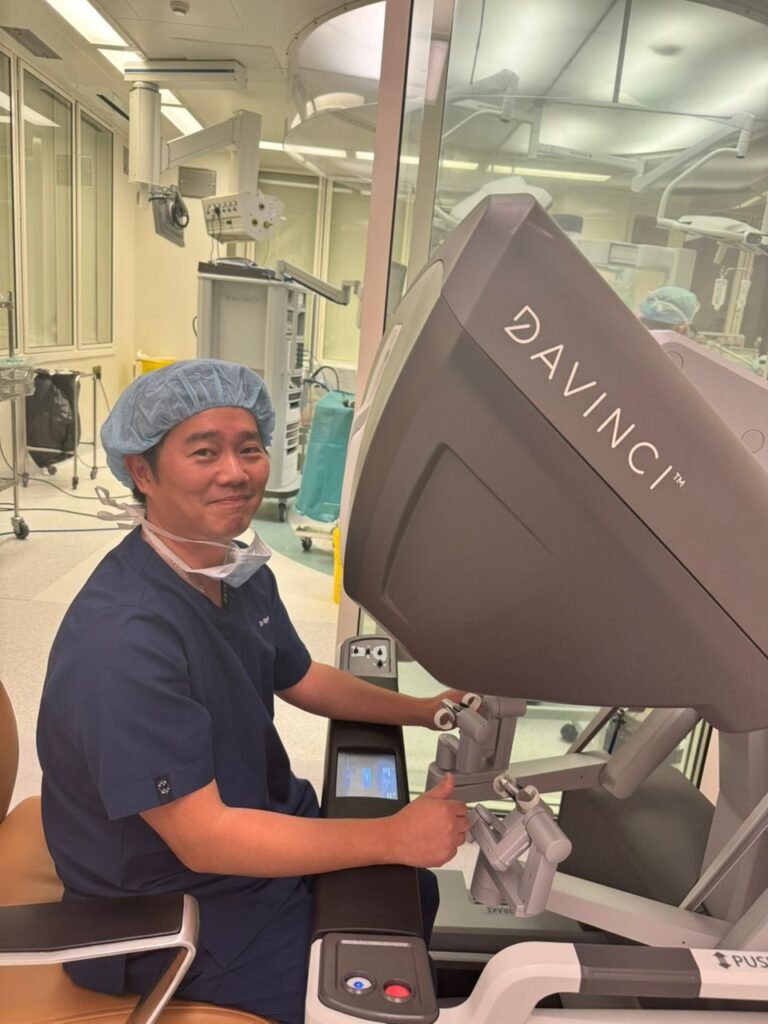
- the surgeon controls the robotic instruments from a nearby surgical console
- the prostate gland and seminal vesicles are carefully removed
- the bladder is then reconnected to the urethra
In selected patients, nerve-sparing surgery may be performed to help preserve erectile function when this can be achieved without compromising cancer control.
Depending on the stage of cancer, pelvic lymph nodes may also be removed for staging or treatment.
Can Robotic Prostatectomy Cure Prostate Cancer?
For men whose cancer is confined to the prostate, robotic radical prostatectomy aims to remove the entire prostate together with the cancer.
Following surgery, the prostate is examined by a pathologist. The pathology report determines:
- pathological stage
- surgical margins
- Grade Group
- whether additional treatment may be recommended
Many patients require no further treatment after surgery. Others may benefit from additional treatment, such as radiotherapy or hormone therapy, depending on the final pathology findings and PSA results.
Regular PSA monitoring after surgery remains an important part of long-term follow-up. Decisions regarding any additional treatment are based on the final pathology findings, PSA results, and multidisciplinary discussion where appropriate.
Recovery After Robotic Prostatectomy
Recovery after robotic prostatectomy occurs in stages. Most patients recover well, but the timeline varies depending on the extent of surgery, baseline health, and individual healing.
Immediately After Surgery
Most patients:
- begin walking on the day of surgery or the following morning
- stay in hospital for approximately 1–2 nights
- go home with a urinary catheter for around 5–7 days
Pain is usually managed with oral pain medication, and many patients are able to return to light daily activities within a few weeks.
Recovery of Urinary Continence
Temporary urinary leakage is common after catheter removal.
Most patients experience gradual improvement as healing progresses and pelvic floor muscle strength returns, usually over the first three months after surgery, although some men require a longer period of recovery. Individual recovery is influenced by factors such as:
- age
- baseline urinary function
- prostate size
- surgical complexity
- pelvic floor muscle conditioning
Pelvic floor exercises are usually recommended before and after surgery.
Recovery of Erectile Function
Recovery often continues for 12–24 months following surgery and varies considerably between individuals, depending on several factors, including:
- baseline erectile function before surgery
- patient age
- location and extent of the cancer
- whether nerve-sparing surgery is possible
- medical conditions such as diabetes or vascular disease
When nerve preservation is appropriate and oncologically safe, recovery may continue gradually over many months following surgery.
What Happens After Surgery?
Follow-up appointments continue after discharge from hospital.
During follow-up, your urologist will usually review:
- wound healing
- urinary continence recovery
- catheter removal
- pathology results
- PSA blood tests
- erectile function recovery where appropriate
Most patients continue improving over several months following surgery.
If additional treatment is recommended, care may involve collaboration with medical and radiation oncology through a multidisciplinary approach.
Possible Risks and Considerations
As with any major operation, robotic prostatectomy carries potential risks.
These may include:
- temporary urinary leakage
- erectile dysfunction
- bleeding
- infection
- narrowing of the bladder neck or urethral connection
- need for additional treatment if cancer extends beyond the prostate
These risks vary between individuals and are discussed carefully before surgery so that patients understand the expected benefits and potential limitations of treatment.
Discuss Your Prostate Cancer Treatment Options
If you have been diagnosed with prostate cancer, a consultation with urologist can help you understand whether robotic-assisted radical prostatectomy—or another treatment option—is most appropriate for your individual situation.
Treatment recommendations are based on your PSA, MRI findings, biopsy results, cancer stage, general health, and personal priorities.
The goal is to help you make an informed decision with a clear understanding of the potential benefits, risks, and expected recovery.
Frequently Asked Questions
Is robotic prostatectomy better than open surgery?
Robotic-assisted radical prostatectomy is widely used because it provides enhanced visualisation and precise instrument control through small incisions. Compared with conventional open surgery, it is commonly associated with less blood loss, smaller scars, and faster early recovery for many patients. However, cancer control and functional outcomes continue to depend on appropriate patient selection, careful surgical planning, and surgical expertise.
How long does robotic prostatectomy take?
The operation usually takes several hours, although the exact duration varies depending on prostate size, anatomy, previous abdominal surgery, and whether lymph node removal is required.
Will I need a urinary catheter?
Yes. A urinary catheter is routinely placed after surgery to allow the bladder and urethral connection to heal. It is usually removed approximately 5–7 days after surgery, depending on your recovery.
How long does urinary leakage last after robotic prostatectomy?
Temporary urinary leakage is common after catheter removal. Most patients experience gradual improvement over the following weeks to months, with many regaining good urinary control within about three months, although recovery varies between individuals.
Can nerve-sparing surgery always be performed?
No. Nerve-sparing surgery is only performed when it is considered oncologically safe. The decision depends on MRI findings, biopsy results, the location of the cancer, and whether preserving the nerves can be achieved without compromising cancer control.
Will I need additional treatment after surgery?
Many patients require no further treatment following robotic prostatectomy. However, some patients may benefit from radiotherapy, hormone therapy, or continued monitoring depending on the final pathology findings and PSA results.
Will all of my prostate cancer be removed during robotic prostatectomy?
For men with localised prostate cancer, robotic prostatectomy aims to remove the entire prostate together with the cancer. The final pathology report confirms the tumour stage, surgical margins, and other important findings. Some patients require no further treatment, while others may benefit from additional therapy depending on the pathology results and subsequent PSA monitoring.
How painful is robotic prostatectomy?
Most patients experience mild to moderate discomfort rather than severe pain. Pain is usually well controlled with oral pain medication, and many patients are able to walk on the day of surgery or the following morning.
When can I return to work?
Many patients return to office-based work within two to four weeks, while physically demanding occupations may require a longer recovery period. Your surgeon will advise you based on your individual progress.
When can I drive again?
Driving may usually be resumed once you are comfortable performing an emergency stop, are no longer taking strong pain medication, and have regained sufficient mobility. This is often after the urinary catheter has been removed, although individual recovery varies.
How often will PSA be checked after robotic prostatectomy?
PSA is monitored regularly after surgery to assess recovery and detect any evidence of cancer recurrence. The schedule varies according to individual circumstances, but PSA is usually checked several weeks after surgery and then periodically during follow-up.
Related Prostate Cancer Resources
Preparing for Robotic Prostatectomy
Understanding Nerve-Sparing in Robotic Prostatectomy
Urinary Control after Robotic Prostatectomy
Sexual Function after Robotic Prostatectomy
Penile & Pelvic Floor Rehabilitation After Robotic Prostatectomy
Prostate Cancer Treatment Guide
Focal Therapy for Prostate Cancer