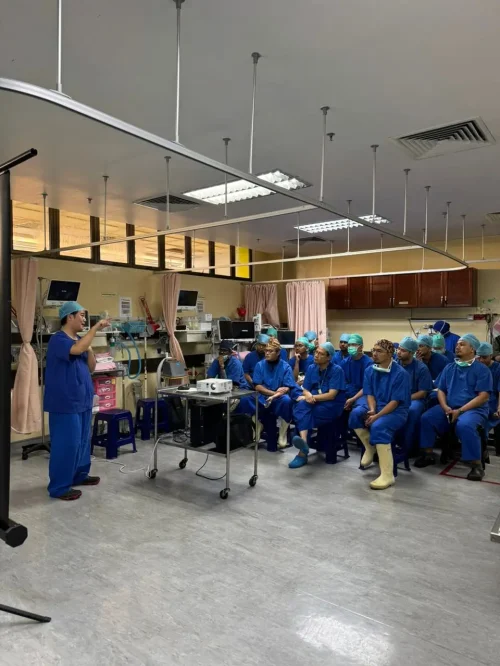
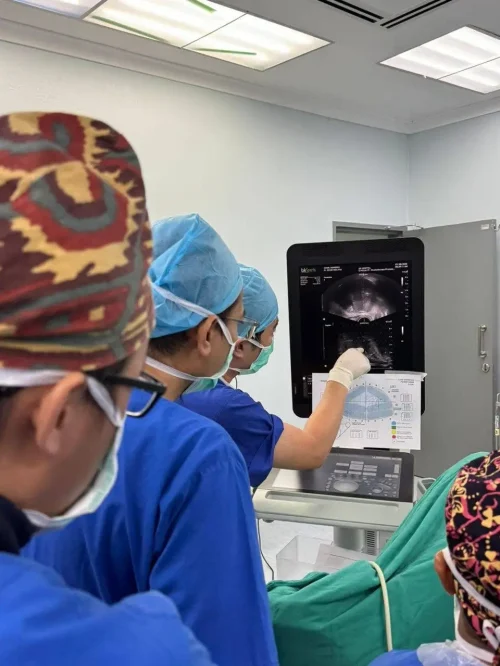
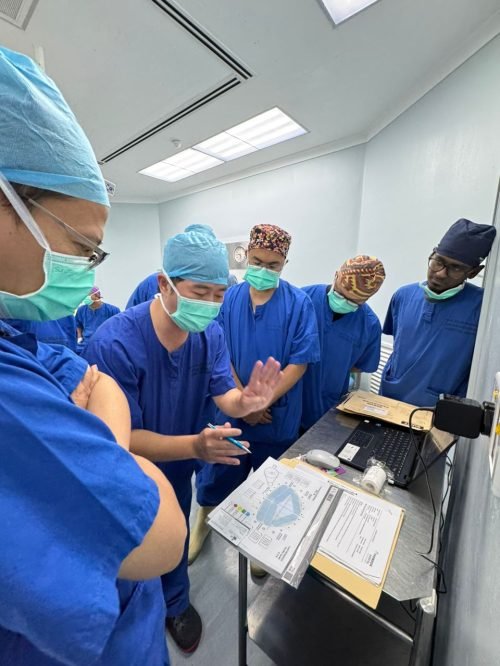
Dr Roger Anthony Idi Invited to Teach at the East Coast LATP Prostate Biopsy Workshop
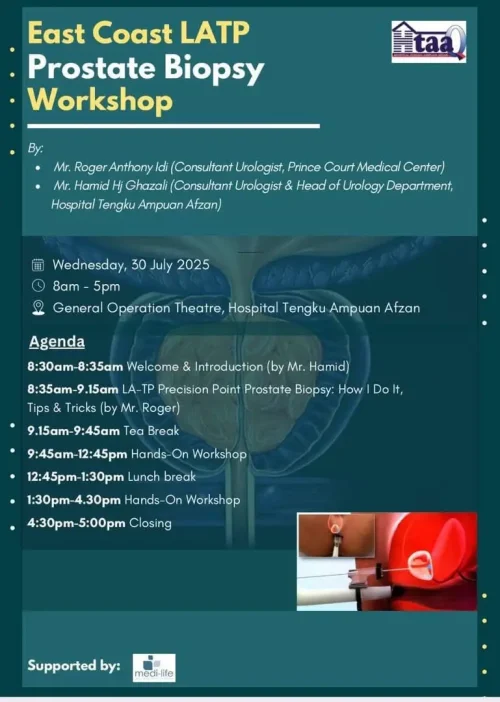
30 July 2025 | Hospital Tengku Ampuan Afzan, Kuantan
Consultant Urologist Dr Roger Anthony Idi was invited to teach at the East Coast Local Anaesthetic Transperineal Prostate Biopsy Workshop held at Hospital Tengku Ampuan Afzan in Kuantan, Pahang.
The full-day workshop brought together urologists and clinical teams for practical training in local anaesthetic transperineal prostate biopsy, also known as LATP.
Sharing practical experience in transperineal prostate biopsy
During the workshop, Dr Roger delivered a teaching session entitled:
“LA-TP PrecisionPoint Prostate Biopsy: How I Do It, Tips and Tricks.”
His session covered the practical steps involved in performing a transperineal prostate biopsy under local anaesthesia, including procedural planning, ultrasound guidance, systematic sampling and technical considerations that may help the procedure run safely and efficiently.
Dr Roger subsequently participated in the hands-on sessions, guiding attendees through the biopsy technique and discussing the practical challenges that may arise during the procedure.
The workshop was conducted together with Mr Hamid Hj Ghazali, Consultant Urologist and Head of the Department of Urology at Hospital Tengku Ampuan Afzan.
What is a transperineal prostate biopsy?
A transperineal prostate biopsy is performed by passing biopsy needles through the skin between the scrotum and anus rather than through the rectum.
The procedure is commonly considered when further investigation is required following findings such as:
- a persistently raised PSA level
- an abnormal prostate examination
- a suspicious area detected on prostate MRI
- continued clinical concern despite a previous negative biopsy
The transperineal route allows different areas of the prostate to be sampled while avoiding the passage of biopsy needles through the rectal wall. In suitable patients, it may be performed under local anaesthesia.
Why practical training matters
Although the principles of prostate biopsy can be taught in lectures, performing the procedure consistently requires familiarity with ultrasound imaging, prostate anatomy, needle positioning and biopsy planning.
Hands-on workshops allow clinicians to observe the technique closely, practise the sequence of the procedure and discuss decision-making with colleagues who regularly perform prostate biopsies.
Teaching at the workshop gave Dr Roger the opportunity to share his practical approach while contributing to continuing clinical education in prostate cancer diagnosis.
Dr Roger’s approach to investigating a raised PSA
A raised PSA result does not automatically mean that a man has prostate cancer. Further assessment may include reviewing the PSA pattern, prostate size, medical history, examination findings, PHI test, prostate MRI and other risk factors.
When a biopsy is recommended, the sampling plan should take account of the MRI findings and the clinical reason for performing the biopsy. Depending on the case, this may include targeted samples from suspicious MRI areas together with systematic sampling from the rest of the prostate.
The aim is to obtain sufficient information to establish whether clinically significant prostate cancer is present and to guide the next stage of care.
About Dr Roger Anthony Idi
Dr Roger Anthony Idi is a Consultant Urologist practising at Prince Court Medical Centre in Kuala Lumpur.
His clinical work includes the assessment of raised PSA, prostate MRI findings, transperineal prostate biopsy, prostate cancer treatment, robotic prostatectomy and focal therapies for selected patients.
He is a Fellow of the Royal College of Physicians and Surgeons of Glasgow and a certified da Vinci Xi robotic surgery user.
Related patient information
Patients seeking further information may read:
Concerned about a raised PSA or prostate MRI result?
An assessment can help clarify whether further monitoring, additional tests or a prostate biopsy should be considered.
Arrange a consultation with Dr Roger Anthony Idi at Prince Court Medical Centre, Kuala Lumpur.