📍 Prince Court Medical Centre, Kuala Lumpur 

Testicular Pain:

Causes, Symptoms & Treatment

Testicular pain can range from a mild ache to sudden, severe pain. It may affect one or both testicles and can occur suddenly or develop gradually over time.

While some causes are minor and improve with simple treatment, others—such as testicular torsion—require emergency treatment to prevent permanent damage to the testicle.

Because several different conditions can cause testicular pain, an assessment by a urologist helps identify the underlying cause and determine whether urgent treatment is needed.
Quick Summary

  • Testicular pain may develop suddenly or gradually.
  • Pain may originate from the testicle itself or nearby structures.
  • Common causes include infection, varicocele, injury and kidney stones.
  • Sudden severe pain should always be treated as a medical emergency until proven otherwise.
  • Many causes of testicular pain can be treated effectively once the underlying diagnosis is identified.

What Is Testicular Pain?

Testicular pain refers to discomfort felt in one or both testicles or within the scrotum. The discomfort may arise from the testicle itself or from nearby structures within the scrotum, groin or urinary tract.

The pain may be:

  • Sharp
  • Dull aching
  • Heavy sensation
  • Intermittent
  • Constant
  • Mild to severe

Some men also notice:

  • Swelling
  • Redness
  • A lump
  • Fever
  • Pain when passing urine
  • Pain during ejaculation
  • Pain extending into the groin or lower abdomen

These associated symptoms often provide clues to the underlying cause.

What Causes Testicular Pain?

Many conditions can cause pain in the testicle or scrotum.

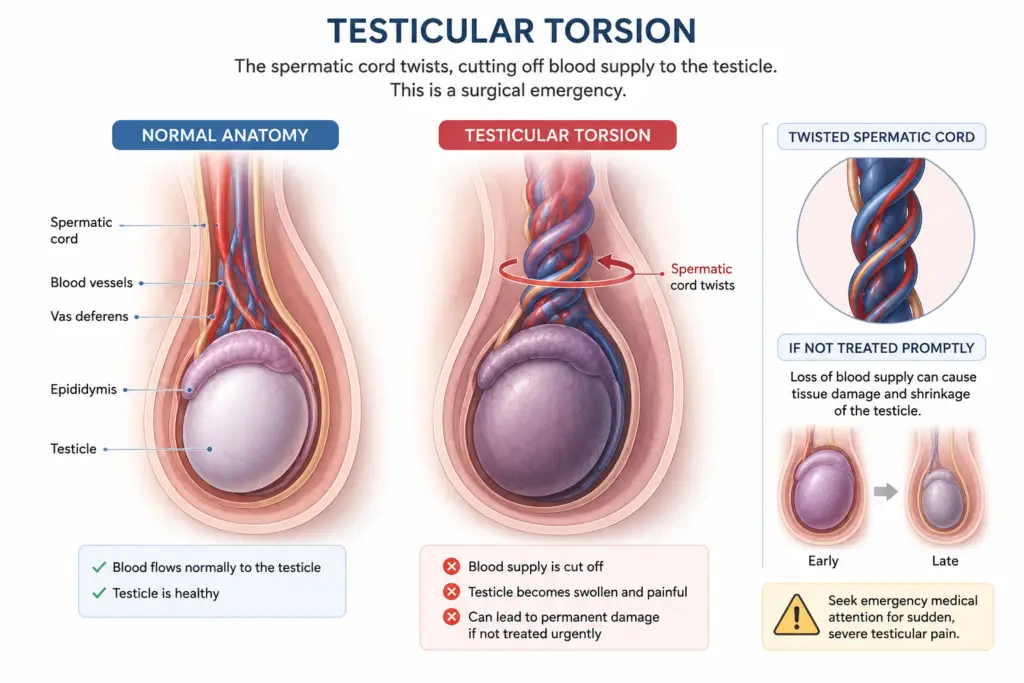
Testicular torsion

Testicular torsion occurs when the spermatic cord twists, cutting off the blood supply to the testicle.

This is a surgical emergency.

Typical symptoms include:

  • Sudden severe pain
  • Swollen testicle
  • High-riding testicle
  • Nausea or vomiting

Prompt treatment offers the best chance of saving the testicle.

Medical illustration showing testicular torsion, where the spermatic cord twists and cuts off the blood supply to the testicle.
Figure 1. Comparison of normal anatomy and testicular torsion. Twisting of the spermatic cord cuts off the blood supply to the testicle, making this a surgical emergency that requires prompt treatment.

Epididymitis

The epididymis is a small coiled tube behind the testicle where sperm mature.

Inflammation or infection of the epididymis can cause:

  • Gradually increasing pain
  • Swelling
  • Tenderness
  • Fever
  • Pain during urination

Treatment usually involves antibiotics when a bacterial infection is suspected, together with supportive measures such as pain relief and scrotal support.

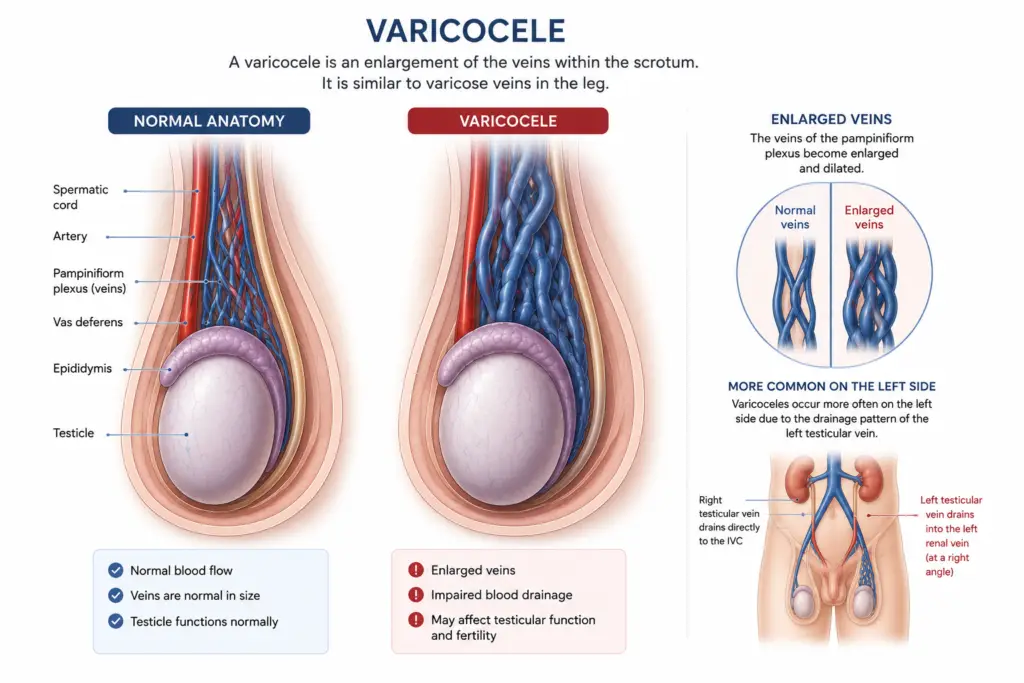
Varicocele

A varicocele is an enlargement of the veins within the scrotum.

It often causes:

  • A dull aching discomfort
  • A feeling of heaviness
  • Pain that worsens after prolonged standing or exercise
  • Symptoms that improve when lying down

Not every varicocele requires treatment, but persistent pain or fertility concerns may warrant further assessment.

Medical illustration showing a varicocele with enlarged veins of the spermatic cord above the testicle.
Figure 2. Comparison of normal veins and a varicocele. Enlarged veins of the pampiniform plexus allow blood to pool around the testicle, which may cause aching discomfort, a feeling of heaviness or affect fertility in some men.

Read more about Varicocele.

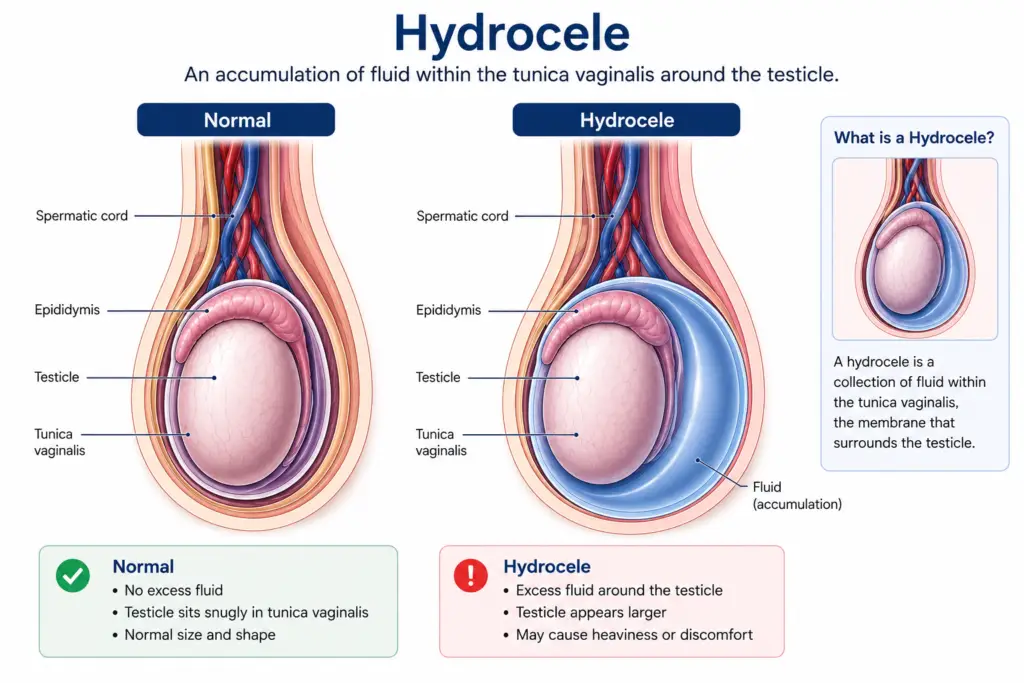
Hydrocele

A hydrocele is a collection of fluid around the testicle.

Although many hydroceles are painless, a larger hydrocele may cause:

  • A feeling of heaviness
  • Mild discomfort
  • Scrotal swelling
Medical illustration comparing normal testicular anatomy with a hydrocele, showing fluid accumulation around the testicle within the tunica vaginalis.
Figure 3. Comparison of normal anatomy and a hydrocele. A hydrocele develops when fluid collects within the tunica vaginalis surrounding the testicle, causing painless or mildly uncomfortable scrotal swelling.

Testicular Tumour

Most testicular tumours present as a painless lump rather than pain alone.

However, some men experience:

  • Dull aching
  • Heaviness
  • Mild discomfort

For this reason, persistent testicular pain should not be ignored, especially if accompanied by a lump or enlargement.

Read more about Testicular Cancer Symptoms and Assessment.

Kidney Stones

Pain from a kidney stone can sometimes travel into the groin or testicle. This occurs because pain from the ureter may be felt in the groin or testicle through shared nerve pathways.

This pain is usually accompanied by:

  • Severe flank pain
  • Nausea
  • Blood in the urine
  • Difficulty finding a comfortable position

Read more about Kidney Stones.

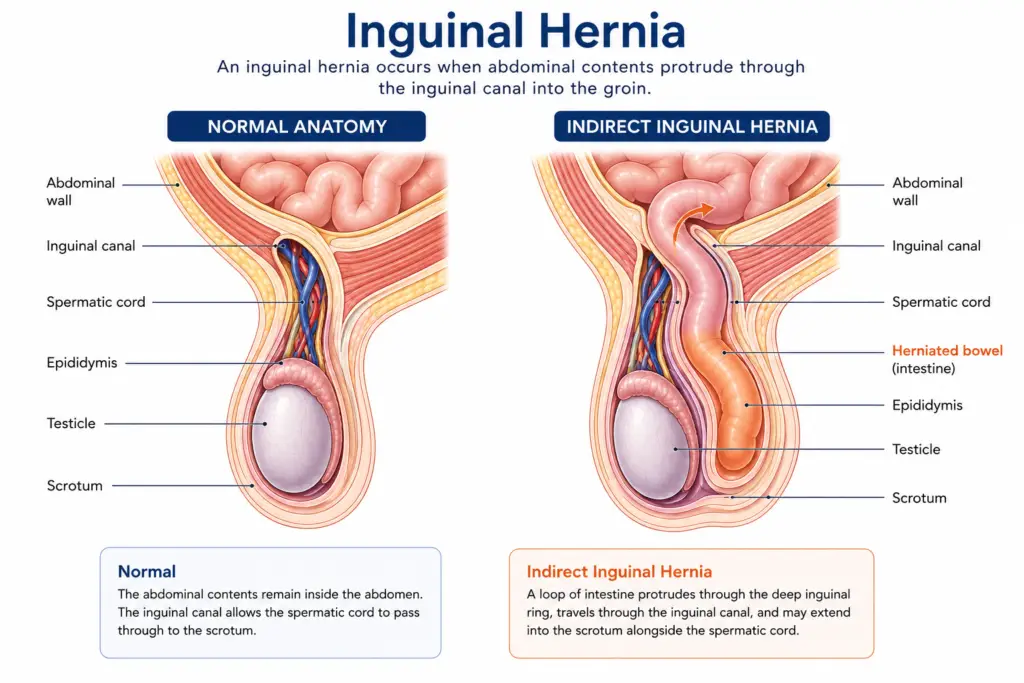
Inguinal Hernia

A hernia may cause discomfort extending into the scrotum, particularly during lifting, coughing or prolonged standing.

Medical illustration comparing normal anatomy with an indirect inguinal hernia, showing a loop of intestine protruding through the inguinal canal into the scrotum.
Figure 4. Comparison of normal anatomy and an indirect inguinal hernia. A loop of intestine passes through the inguinal canal and may extend into the scrotum, resulting in a groin or scrotal bulge.

Injury

Direct trauma during sports or an accident may cause temporary pain.

Persistent pain after an injury should be assessed to exclude bleeding, rupture or other injuries affecting the testicle.

Referred Pain

Sometimes the source of pain is not the testicle itself. The testicle may be completely normal.

Pain arising from nearby muscles, nerves, the lower back or pelvis can be felt in the testicle because these areas share some of the same nerve pathways. This is known as referred pain.

Possible causes include:

  • Lower back problems
  • Muscle strain involving the groin or lower abdomen
  • Nerve irritation
  • Hip conditions

Testicular examination and scrotal ultrasound are often normal in these cases. Further assessment may be needed to identify the true source of the pain and determine the most appropriate treatment.

When Is Testicular Pain an Emergency?

Seek immediate medical attention if you develop:

  • Sudden severe testicular pain
  • Rapid swelling
  • Severe pain after an injury
  • Fever with severe scrotal pain
  • Nausea or vomiting together with sudden testicular pain
  • A painful swollen testicle that develops suddenly

These symptoms may indicate testicular torsion or another condition requiring urgent treatment.

When Should You See a Urologist?

Arrange an assessment if:

  • Pain lasts longer than a few days
  • Pain keeps returning
  • You notice a lump
  • The testicle becomes swollen
  • The discomfort affects daily activities
  • Pain occurs together with urinary symptoms
  • You are concerned even if symptoms seem mild

Early assessment helps identify whether further investigation or treatment is required.

How Is the Cause of Testicular Pain Diagnosed?

Assessment usually begins with a discussion of your symptoms followed by a physical examination.

The choice of investigations depends on your symptoms and examination findings:

  • Urine tests
  • Blood tests
  • Scrotal ultrasound
  • Ultrasound of the kidneys if stones are suspected
  • CT scan in selected situations

These investigations help determine the underlying cause and guide treatment.

How Is Testicular Pain Treated?

Treatment depends on the underlying diagnosis.

Possible treatments include:

CauseTreatment
Testicular torsionEmergency surgery
EpididymitisAntibiotics (when appropriate), pain relief, scrotal support
VaricoceleObservation or surgery in selected patients
HydroceleObservation or surgery if symptomatic
Kidney stonesPain relief, medical therapy or stone treatment
HerniaSurgical repair when indicated
InjuryRest, pain relief and monitoring

The goal is to treat the underlying condition rather than simply relieving the pain.

Frequently Asked Questions

Can testicular pain go away on its own?

Yes. Minor injuries or temporary inflammation may improve with time. However, persistent, worsening or severe pain should always be assessed.

No.

Most men with testicular pain do not have testicular cancer. However, because some tumours can cause discomfort or heaviness, persistent pain or a lump should be evaluated.

Yes.

Varicoceles commonly cause a dull aching discomfort or feeling of heaviness, particularly after standing for long periods or physical activity.

Pain can occur without a lump. Conditions such as epididymitis, varicocele, kidney stones and testicular torsion often cause pain without a noticeable mass.

Yes.

Sudden severe testicular pain should be treated as an emergency because prompt treatment is essential if testicular torsion is present.

Yes.

Pain from a kidney stone may travel along the nerves into the groin or testicle, even though the testicle itself is normal.

Sitting for prolonged periods may worsen discomfort from conditions such as a varicocele or chronic scrotal pain, but persistent pain should still be assessed to identify the underlying cause.

When to Seek Medical Assessment

Persistent or severe testicular pain should not be ignored. While many causes are not serious, some require prompt diagnosis and treatment to protect the health of the testicle.

If you have ongoing pain, swelling, or are unsure about the cause of your symptoms, an assessment by a urologist can help identify the underlying condition and discuss the most appropriate next steps.

Scroll to Top