
Deflux Injection for Vesicoureteral Reflux (VUR) in Children
A minimally invasive endoscopic treatment that may be considered for selected children with vesicoureteral reflux (VUR), recurrent urinary infections, or persistent reflux requiring further management.
Deflux Injection for Vesicoureteral Reflux (VUR)
Deflux injection is a minimally invasive treatment option for selected children with vesicoureteral reflux (VUR).
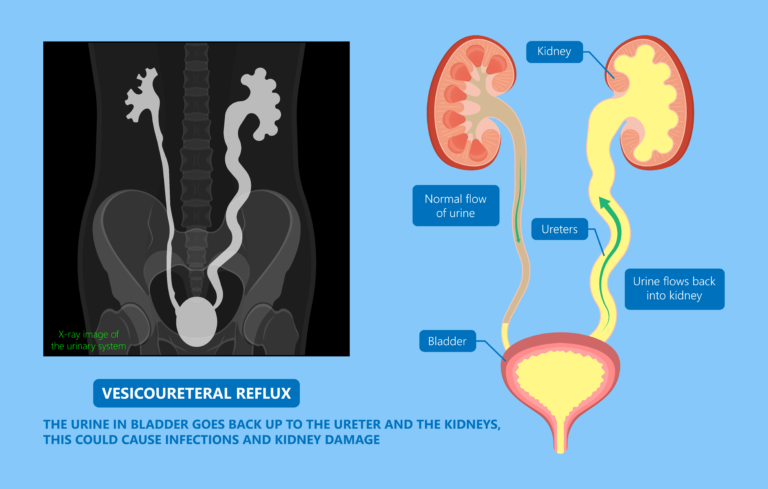
VUR occurs when urine flows backward from the bladder towards the kidneys instead of moving in the normal direction. In some children, this may increase the risk of recurrent urinary tract infections, kidney infections, or kidney scarring over time.
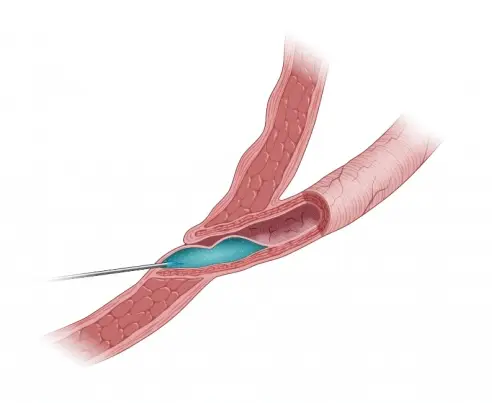
Deflux treatment involves injecting a specialised bulking material near the ureteric opening inside the bladder. This helps create support around the opening and reduce backward urine flow.
Treatment decisions for VUR should be individualised. Some children may improve with observation alone, while others may require medical treatment, Deflux injection, or surgery depending on the severity of reflux, infection history, kidney findings, and bladder function.
Deflux Injection — At a Glance
- Minimally invasive endoscopic treatment for selected children with VUR
- Performed without external surgical incisions
- Aims to reduce backward urine flow from the bladder toward the kidneys
- Usually performed under general anaesthesia
- May be considered for persistent reflux or recurrent urinary infections
- Recovery is usually faster than open surgery
- Follow-up remains important after treatment
What Is Vesicoureteral Reflux (VUR)?
Vesicoureteral reflux, or VUR, is a condition where urine travels backward from the bladder into one or both ureters and sometimes up towards the kidneys.
In many children, VUR is detected after recurrent urinary tract infections or abnormal ultrasound findings. The condition can vary from mild to severe.
Mild reflux may improve as a child grows. More significant reflux, especially when associated with recurrent feverish urinary infections or kidney changes, may require closer monitoring or treatment.
The main aim of VUR management is to reduce the risk of repeated kidney infections and protect long-term kidney health.
What Is Deflux Injection?
Deflux injection is an endoscopic treatment for VUR. It is performed using a small camera instrument called a cystoscope, which is passed through the natural urinary passage into the bladder.
A soft bulking material is injected near the ureteric opening inside the bladder. This helps improve the valve-like mechanism where the ureter enters the bladder, reducing the chance of urine flowing backward.
Because the procedure is performed endoscopically, there are no external surgical cuts.
Who May Be Suitable for Deflux Injection?
Deflux injection may be considered in selected children with:
- persistent vesicoureteral reflux
- recurrent urinary tract infections
- breakthrough infections despite preventive antibiotics
- lower to moderate grades of reflux in appropriate cases
- reflux that has not improved with observation
- families seeking a minimally invasive treatment option where suitable
However, not every child with VUR needs Deflux injection.
Some children may improve naturally with time. Others may need continued monitoring, antibiotics, bladder management, or surgery depending on their individual condition.
A paediatric urology assessment is important before deciding whether Deflux injection is appropriate.
Benefits and Important Considerations
Potential advantages of Deflux injection may include:
- minimally invasive approach
- no external incision
- shorter recovery compared with open surgery
- shorter hospital stay in many cases
- less disruption to normal activities
- may reduce the risk of recurrent urinary infections in suitable cases
Important considerations include:
- success rates vary depending on reflux severity and anatomy
- some children may need repeat injection
- reflux may not completely resolve in all cases
- follow-up imaging may still be required
- some children may eventually need surgery
- bladder function and constipation may also need to be addressed
The most suitable treatment depends on the child’s overall clinical picture, not just the reflux grade alone.
Comparing VUR Treatment Options
Approach | Observation / Monitoring | Deflux Injection | Open or Robotic Surgery |
|---|---|---|---|
Main aim | Monitor for natural improvement | Reduce reflux minimally invasively | Correct reflux surgically |
Incision | None | No external incision | Surgical incision or keyhole approach |
Anaesthesia | Not required | General anaesthesia | General anaesthesia |
Hospital stay | Usually none | Often day procedure or short stay | Usually longer stay |
Recovery | No procedure recovery | Usually faster | Longer recovery |
Repeat treatment | Ongoing monitoring may be needed | Repeat injection may sometimes be needed | Repeat surgery less commonly needed |
Best suited for | Selected mild cases | Selected children with suitable reflux pattern | More severe, complex, or persistent reflux |
Treatment should be individualised based on reflux grade, urinary infections, kidney findings, bladder function, age, and previous response to treatment.
What Happens During Deflux Injection?
Deflux injection is usually performed under general anaesthesia.
During the procedure, a cystoscope is gently passed through the urinary passage into the bladder. The surgeon identifies the ureteric opening and injects the Deflux material beneath or near the opening.
This creates a small supportive mound that helps reduce backward urine flow.
The procedure does not require external cuts. Most children recover relatively quickly and may be able to return home on the same day or after a short period of observation, depending on their condition and hospital assessment.
Recovery After Deflux Injection
Most children recover well after Deflux injection.
Some may experience mild urinary discomfort, passing urine more frequently, or a small amount of blood in the urine for a short period after the procedure. These symptoms are usually temporary.
Parents should follow the post-procedure advice given by the treating team, including guidance on fluids, medications, activity, and follow-up appointments.
Follow-Up After Treatment
Follow-up is important after Deflux injection to assess the child’s response to treatment and monitor kidney health.
Follow-up may include:
- review of urinary symptoms
- urine tests if infection is suspected
- kidney and bladder ultrasound
- repeat imaging in selected cases
- monitoring for recurrent urinary tract infections
Even after treatment, some children may require ongoing observation, especially if they have bladder dysfunction, constipation, kidney changes, or recurrent infections.
When to Seek Medical Assessment
Medical assessment may be helpful if a child has:
- recurrent urinary tract infections
- fever associated with urinary symptoms
- pain or discomfort when passing urine
- poor urine flow
- urinary accidents or bladder control concerns
- kidney swelling seen on ultrasound
- known vesicoureteral reflux requiring follow-up
Early assessment can help identify children who may need further investigation or treatment to reduce the risk of repeated kidney infections.
Key Points for Parents
- VUR means urine flows backward from the bladder towards the kidneys.
- Some children improve naturally as they grow.
- Deflux injection is a minimally invasive treatment option for selected cases.
- It is performed through the natural urinary passage without external cuts.
- Not all children with VUR need a procedure.
- Follow-up remains important even after treatment.
- Treatment decisions should consider infections, kidney findings, bladder function, and overall risk
Discussing Deflux Injection and VUR Treatment
Vesicoureteral reflux treatment should be tailored to each child’s symptoms, infection history, imaging findings, kidney health, and bladder function.
For children being considered for Deflux injection, careful assessment is important to understand the potential benefits, limitations, alternatives, and follow-up requirements.
Appointments and further evaluation are arranged through Prince Court Medical Centre, Kuala Lumpur.